Get Started Doing Regular Exercise You LOVE By Using Proven Strategies, Tactics, and Tools That Most People Will NEVER Have Access To. 

Get The Secrets to develop an Exercise Programme you genuinely LOVE doing Without fighting the Uphill motivation battle against old habits!

🚀 You’ve Found A Different Approach To Exercise

The affordable way to get started that respects your priorities, your time, and your preferences.

If you’re here, you’re somebody who's ready for a practical approach to exercise that actually works. Not another dogmatic programme that doesn’t care about how your particular body works. And not another vapid, body-image deteriorating demand that you reconfigure your body into a form that is pleasing for social media users to consume as part of their information diet.

How in the world is that supposed to help?

Your fitness, strength, and physical capability should NEVER be reliant on your vanity.

Let's evolve beyond that ridiculous yet ever-popular notion.

No fads.
No dogma.
No blanket expectations.
No limit-pushing, coercive nonsense. 

Instead we offer: 

Capability gains.
Extreme realness.
Results you actually care about.
Respect for the priorities in your life. 

Use It or Lose It: Your Most Capable Body is the online learning course that solves ONE very specific problem:
Show People Who Need More Exercise Exactly How To Make It Easy to Get Quality Exercise They Love.

That’s what we’re doing here. So if you are that person, this is ALL for you.

(Or if that is not you, then farewell and thank you for coming by.)

To straight away practice what Use It or Lose It is all about, let’s do an exercise in extreme realness right now:

In the numbered sections below I offer the circumstances that need to be true before somebody makes the potentially life changing decision to buy and use this online learning course.

It’s offered as a full evaluation guide offered with complete frankness. Your job is to honestly confirm for yourself if each is true for you as you go.

At the end you’ll be presented with a decision. By evaluating with complete honesty with yourself, you’ll have reached that decision point using what I call extreme realness. Another name for it could be unconditional self-honesty.

If that sounds good to you then I think you'll agree realness is one exercise that’s always worth a rep.

So let’s ask and answer the essential questions about Trust, Money, and Proof that this approach works.

1️⃣ Can You Trust the Judgement and Knowledge of the Author of this Learning Course?

Yes, you most certainly can. That’s easy for me to say. Here’s my rationale:

We’ve all seen lots of voices in fitness. Some awe-inspiring, some useful, some confusing. Skepticism is ESSENTIAL. So what’s Use It or Lose It’s position on fitness?

My position is this:

1. Physical capability and exercise should never be dependent on vanity and social status-seeking.

2. Physical capability and exercise should depend on genuine enjoyment PLUS enjoyment of the benefits it provides; particularly the preservation and development of physical capability.

Why does that matter?

We are bombarded with body-image constantly by our media. Explicitly, implicitly, socially, privately, externally and even internally once we’ve absorbed enough of it. I fully acknowledge the allure is real. Who wouldn’t want to look like the coolest celebrity after an 18 week full-time intensive workout and meal plan run by the most brilliant and ambitious personal trainers in the world.

But the harsh fact remains: Exercise that is driven by how you LOOK is unsustainable. Because looks are temporary. And more significantly, it's just a front. Exercise is too important to your physical and mental health for it to be built on a transient and fragile facade. It needs a strong foundation, and that foundation is a healthy attitude, fact-based expectations, and physiological and psychological alignment (which simply means actions that feel good both physically and emotionally, rather than one at the expense of the other). When a movement you do regularly feels good to your body, and satisfying to your mind, in terms of the benefits it gives you, then you have an enjoyment-driven feedback loop that will keep you invested in it long-term.

I do think some vanity is perfectly fine when there are no negative behaviours. I think self-esteem is better. But I believe exercise should be predicated on enjoyment not social status seeking.

My mission with Use It or Lose It is to bring the benefits of that approach to others by offering an affordable, actionable, and reliable way of implementing good quality exercise into a more realistic life – a life without the Hollywood personal trainers, personal chefs, and million dollar budgets. Personally, I’ve never experienced the high budget life. It sounds fun. But even achieving a blockbuster-film-ready body will never feel as good as the feeling of a person who has struggled getting into exercise finally unlocking good quality exercise they LOVE TO DO by developing the right mindset, taking the right actions, in the right order, and astonishing themselves with behaviour and experiences they didn’t believe they’d ever have.

So that’s why it matters.

We can't go lacklustre.
We don't need blockbuster.
All we need is smart, sustainable, personalised behaviour design.

Who is behind it?

I'm Michael Pritchard, an instructional designer and exercise enthusiast from Aotearoa, New Zealand. I made Use It or Lose It: Your Most Capable Body with the mission to solve this one problem that is very dear to my heart: I’m here to show people who need more exercise exactly how to make it easy to get quality exercise they love.

I made this course after I spent 15 years and about $2000 learning and developing this toolkit the hard way.

Use It or Lose It: Your Most Capable Body isn’t some AI generated slop. It is 15 years of lived experience and field tested knowledge hand-crafted into an online course you can implement in under 3 weeks. That’s the deal.

Some people are perfectly happy to "just get on ChatGPT instead" and work through their stuff. Respect, and if that's you farewell and good luck!

Personally, I would never in my life trust something on which my health and capability both depend to a machine that does not turn up 100% trustworthy information. That's why what I offer instead is the real article. Not a "convincing answer" cobbled together from other people's words ripped out of their context, but sincerely related lived experience very much in context, and crafted by a pro learning designer into practical, actionable steps intended to meet you where you're at.

Because the purpose of the course isn't to seem useful. It's to BE useful. I don't mean to preach too hard about this, but I cannot overstate the importance of that distinction. Emerging "AI tools" may or may not turn out to have their place. But there is no denying the fact that human-made learning works exceptionally well. So we'll use that. Because it comes down to respect of you, and the importance of what you're setting out to accomplish.

In this material, where exactly do I draw the line? I can promise:

No fads.

No guesswork.

No “these magic exercises are perfect for everybody” dogma.

All information in the course is backed by lived experience.

Your time, your effort, and your money deserve respect. You deserve clear guidance to design exercise behaviours, and you deserve to know how to break through exercise deadlock using tools you can rely on to do the job.

That’s exactly what I offer, as somebody who:

✔ Learned the hard way the value of capability and enjoyment as the foundation of exercise.

✔ Can clearly convey the role that beliefs, self-narratives, and identity have on behaviour.

✔ Went from being trapped in total exercise deadlock by invisible barriers (I’ve lived it) to becoming a passionate, lifelong lover of exercise.

✔ Works as an instructional designer making online courses for a living, which is why Use It or Lose It is an online course, not an in-person training session: I would much rather people have an always-available toolkit and skillset they can rely on, than a sometimes-available individual they can rely on.

Bottom line: I don’t want your trust for free. I want to earn it by the usefulness of this exercise behaviour design toolkit.

To put action to that point (which is how the entire course operates) I’ll hand the first part of the course to you for free shortly. Because trust is earned by actions, not words. There's one more fundamental question I want to cover off first and that’s the question of whether or not it actually works.

2️⃣ Will This Course Work to Show You How to Identify and Solve Your Exercise Blockers?

This is not “take the magic pill and hope it works.”

It is purely coordinated, step-by-step ACTION. Zero guesswork. It's decisions and agency all the way down.

This course gives you:

✔ A toolkit to uncover what your real blockers are.

✔ A method for developing for yourself better beliefs and self-narratives that are based on facts you know.

✔ The principles and actions that acknowledge the reality that life is busy, full of priorities, and sometimes difficult.

You won’t ever have to guess your way forward or have to put up with uncertainty. You’ll know exactly what to do next every step of the way.

This won’t resonate with everyone. But if the premise so far sounds like it could be worthwhile to you, and you want proof it works then here’s the deal:

The solution to Exercise Deadlock is something I want to hand to you for free.

Exercise blockers, especially those cases of “I WANT to exercise and I don’t know WHY I don’t” are brutal. They leverage excuses, uncertainty, and all our protective instincts against us taking action.

So to facilitate the crucial first step of taking initial action, I want to take the excuse of cost off the table by handing you the first four lessons from Use It or Lose It: Your Most Capable Body free right now.

Along with my GUARANTEE that once you experience success you’ll know for certain if the full course is worth the investment. The intention here is to fight the uncertainty that may be working against you by creating certainty that works FOR you.

So here it is. Proof that Use It or Lose It works for YOU: Grab Your First 4 Lessons Here!

(You’ll receive your login email with a link you can use to start right now, or whenever you’re ready. I suggest giving it one hour ASAP, before feelings of motivation fade. These tools only work when action is taken.)

If this pack didn’t genuinely work I wouldn’t be handing it out. But I genuinely want everyone who faces mental blockers, whether known or unknown, to be equipped to deal with them. And what I love about this pack is that these four lessons alone could solve your entire set of blockers!

They did for me.

Once you’ve tried it, you’ll know if the rest of the toolkit in the full course is right for you.

What’s in the rest of the course? Capability analysis, the simple way to identify the best-of-the-best movements for your unique body, the nuts and bolts of scheduling, and more!

If you’ve pocketed your 4 lessons for later action but want to continue here, let’s get extremely real about costs next. The financial side of exercise (and tools that enable your exercise), is valuable to understand.

3️⃣ Is Solving Exercise Deadlock WORTH Your Time and Money?

Let’s keep it extremely real and talk numbers.

Do Nothing: Risk a $6,194+ medical bill
The long way: Estimated $2,000
The easy way: A $97 one-time fee

It's an honest comparison. Let's substantiate it:

There is a cost to doing nothing:

1. Vulnerability to cardiovascular disease: The Journal of the American Medical Association tells us the out-of-pocket expenses for a heart condition often exceeds $2,000 annually.

2. Heightened susceptibility to depression: In that event the US National Depression Hotline has published that treatment costs in the US are between $4,194 to $10,463 annually.

3. Capability loss over time: If you want to price that one out, just answer this: How much would you pay, in dollars per year, to KEEP your ability to use a toilet and a shower without relying on somebody else? (Hundreds? Thousands? Me too.)
As well as the other movements you rely on day to day gradually weakening over time.

Heart disease, depression, and capability loss are real risks. There's no guarantee they'll cost you, or when they'll arise. But they are real risks that carry real consequences and high costs, and the only way to prevent them requires making a change to get regular exercise before these things come up.

Conversely, there is also a cost to making your own solution. In my experience that was:

1. It took me 15 years of trial and error.

2. And about $2000, or $133.00 per year, spent on the experiences and resources I needed to learn or figure out what I now know. The very best of which, I’ve distilled into this course.
Ultimately worth it, and your mileage may vary.

But you have something I didn't, which is someone willing to save you the effort and just hand you the answers.

But there is also a cost to investing in a packed-and-ready solution:

1. $97 one-time payment.

2. 20 hours of time and effort over 3 weeks. To gain skills you can keep for life.

3. The beliefs and self-narratives holding you back.

I don't see how the costs of each of these options could be laid out more plainly than that to compare.
15 years ago, I sure know which one I’d pick.

So the question is: Can you afford to solve this problem?

But also: Can you really afford not to?

4️⃣ Is This A Solution That Fits Your Timeline?

If you're like me, you don’t have months or years to waste trying this and that only to find you don’t get the results you’re looking for. That’s a seriously discouraging path to tread. It can take years. I would know: because I tried it that way.

This course is structured so that every action you take enables you to move forward from a strong foundation from lesson to lesson, building on each step as you go. It cuts out all the waste and uses what works.

I strongly believe there is a right order to approach exercise behaviour design, and that's why it is built into the course:

1. Do the groundwork up front to get your mental state prepared, and those mental blockers cleared

2. Gain clarity and certainty early in the process.

3. Be extremely real with yourself, your body, your values, and the movements you actually enjoy.

4. Audit your capability over time: past, present, and future.

5. Start with easy, achievable commitments you enjoy and explore from there at your own pace.

6. Define progress you can measure in a way that works for you.

This is not a way to “get fit quick”. This is a way to get started confidently. It’s an exercise behaviour design course that shows you how to build exercise you enjoy into the life you actually live.

How long does it really take?

Approximately 20 hours all up. Recommended to do it over 3-weeks. (Or shorter, if you do multiple lessons a day. Or longer, if you want days to practice and apply lessons in between, or simply have a busy patch of higher priorities going on.)

20 hours of work to get UNLOCKED. Right away you'll be in a position to start, or get back into exercise. You'll have the right frame of mind so you'll be thinking about what you enjoy and what you don't, what hurts or is uncomfortable vs what movements feel GREAT, what's a pain to get to and what's a breeze, and through the regular movement itself you'll get a feel for how your energy is affected by regular exercise. Maybe you'll be exercising at a time of day when you have high-energy and be able to go ahead full steam! Or maybe you'll be tired after work, as many of us are, and discover that actually these movements that feel great were worth the trip because they actually energise you from all the mitochondrial activation generated by the movement.

And you'll be extremely real with yourself about all of it. Things like "social norms" and peer pressure and social media fitness culture and all that stuff will exit the way you look at exercise, because you've got better, far more serious measuring tools:

"Do I enjoy this?" and "Do these movements matter to me?" will make it very clear what exercises you should and should not be doing.

All just from 20 hours of up-front skill practice that will transform the way you look at exercise!

5️⃣ Is This One Option of Many or a Unique Opportunity in Front of You?

Opportunities aren’t just options. They are moments in time where conditions align:

You’re here, which demonstrates you’re serious.

You’re aware, which facilitates action.

You’re curious, which facilitates learning.

You’re looking for something that works.

Some people never act. They wait. We all wait sometimes, and we all know waiting gets us nowhere.

But you’re here reading this, meaning you’re evaluating the arguments being put to you.

That means you found the opportunity.

The fun part, the decision, is purely up to you to seize it.

Opportunities are defined by that window of time. Use It or Lose It will never close or contrive the window of opportunity by having an artificial “Limited Time” period – it’s open, and it will STAY open and ready to rock. That’s part of respecting your time, and your timeline.

If things are aligned favourably for you right now, then this opportunity is defined by you and your life. Your availability. Your needs. And what YOU want and are willing to do.

Personal agency matters. Decisiveness matters. Action matters.
These are tools you can rely on for making a sustained change.

But relying on willpower indefinitely?
Holding self-discipline through every circumstance that arises?
Expecting good luck to see you through?
Those tools are not up to the job.

When faced with an opportunity that appeals we can seize it or we see watch it leave. By seizing an opportunity you are choosing the next change that happens. The only alternative is to let circumstances choose the next step for you.

6️⃣ Why Choose Digital Learning For Exercise Behaviour?

I’ve noticed people who aren’t familiar with digital learning tend to think online courses are “just videos” or “just slides”. That’s an understandable starting perspective but it’s inaccurate.

Digital learning is designed to achieve a specific learning outcome. And as part of that, I would say the most fundamental ingredient is Action.

Specifically, an instructional design principle I strongly believe in is the idea that:

Instruction + Active participation + Observable results = A successful learning experience

A career in instructional design has taught me:

✔ Self paced e-learning containing actionable exercises (reps!) is every bit as effective as in-person training or 1-on-1 coaching. Because the same learning principles apply. They’re the same reps.

✔ The primary determining factor in an online education programme’s success is the attitude of the participants.

✔ People retain knowledge effectively when they apply it. That’s what skill is: Knowledge applied as actions that achieve an intended effect.

Experience has taught me what good quality e-learning looks like. It doesn’t need to be fancy. It DOES need to use the principles of learning, the most effective of which I have observed to be that combination of instruction, action, and observable results.

It’s useful knowledge. But what I didn’t know was what people think of online learning in general. So I ran a research survey. I was surprised to learn that:

32% Of people surveyed had used online learning courses before and DID achieve their intended learning outcome. Great!

7% Had used online learning courses before but DID NOT achieve their intended learning outcome. To me that signifies room for improvement across the industry.

50% Were aware of online learning courses but had never tried one. Why not!

11% Were not even aware online learning courses were a thing!

So (adding those last two groups) tells us 61% of people have never benefitted from online learning!

But of the people who HAD experienced online learning courses (of any topic) the overwhelming majority of them had success!

To me that shows e-learning to be a valuable industry with proven effectiveness... but most people (more than half!) the population have not been benefitting from it yet!

This is significant to me since I also know that 1 in 4 adults are not getting enough exercise (as reported by the WHO Global Status Report on Physical Activity). And the WHO's standard for exercise is quite a low bar for entry: For adults aged 18-64 the minimum recommended amount of exercise is 150 minutes of moderate intensity exercise per week.

In practical terms, that's a 22 minute walk per day. 1 in 4 adults aren't at that level, for whatever reason.

And that's the crux of it: For each person, what's the reason? What's the cause? What are the blockers?

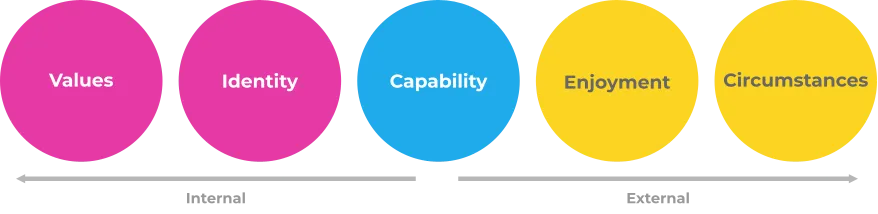
Circumstances have a role. So do our own choices. As does our identity, mentality, beliefs, and self-narratives about exercise.

Nobody should have to rely on the luck of favourable circumstances. Not when we can systematically identify and overcome behaviour barriers by leveraging in concert the many things we can control.

Use It or Lose It is on a mission to help people do that by offering a low cost, moderate effort, highly effective method for breaking Exercise Deadlock and getting started in exercise by setting up beliefs and self-narratives that serve you. And by following the path of enjoyment and capability. Because if it's both fun and it's empowering it becomes worth sticking with.

All without the “THESE are the best exercises” dogma that traditional approaches use, and with an emphasis on CAPABILITY and not on LOOKS that mainstream fitness culture keeps blasting us with.

This isn’t passive instruction. It isn’t passive anything. It’s Instruction + Active participation + Observable results. An online learning course that delivers to a single, focused objective:

Show people who need more exercise exactly how to MAKE IT EASY to get QUALITY EXERCISE THEY LOVE.

When you observe the results of changes to your exercise behaviour, going from complete deadlock to being excited to go and do your daily or weekly movement session, you are going to be thrilled!

That’s the whole idea.

So thanks for hearing me out. I hope this gives you an actionable perspective with which to view exercise.

Because now we come to the best part: Decisive Action.

Decision Point: Which Will You Choose At This Moment?

👉 Do Nothing About Exercise

👉 Figure It All Out Yourself

👉 Get Use It or Lose It and Start Today

Thanks for Learning!
Michael Pritchard

Š 2026 Use It or Lose It: Your Most Capable Body - All rights reserved